 Atlas’ commitment to corporate responsibility is getting attention. John Dietrich, President & CEO, has been named to “The Responsible 100,” an annual list representing New York’s 100 most outstanding corporate citizens.
“The Responsible 100” list is compiled annually by New York City & State, a news media organization, to honor “an elite group of New York’s most powerful executives, thought leaders, visionaries and influencers, who are setting new standards of excellence, dedication and leadership in improving their communities and making transformative change,” according to event organizers.
The award reflects the commitment of Atlas under John’s leadership to operate as a good corporate citizen, from an internal focus on ethics, sustainability and diversity to an external strategy on philanthropy to community engagement.
“There is no question that this year has provided unprecedented challenges and changes for New Yorkers,” said Ralph Ortega, Interim Editor and Chief of City & State. “We have seen chaos, strife, tragedy and turmoil… a global pandemic, racial reckoning, political upheaval and social unrest. Amid the trials and tribulations, in many ways we’ve also seen the triumph of the human spirit — generosity, compassion and small acts of kindness that help others get through the day. The individuals we are recognizing today are some of those extraordinary people doing their part to make the world a little bit better, which is something we need now more than ever.”
“Social responsibility means being committed to our people, the communities in which we operate, and the world,” said John. “It also means being a catalyst for economic and social progress. Corporate citizenship is firmly rooted in our Atlas core values.”
Atlas’ role in supporting PPE transport this year, and specifically the company’s donation to frontline workers at NYU Langone, contributed to John’s selection for this honor.
“The role we are playing amidst the pandemic is a testament to our commitment as a company to be a force for good,” said John. “Since COVID-19 began, we have worked to safely and efficiently deliver the goods that the world depends upon—medical equipment, pharmaceuticals, PPE and everyday supplies.”
John was highlighted together with other recipients at a virtual event on December 16, hosted by the Reverend Al Sharpton. The celebration included special presentations by noted figures from the New York’s business, nonprofit and academic communities working at the forefront of the Corporate Social Responsibility movement.

I am very proud of how our team has responded to the COVID-19 pandemic. China has produced a significant amount of PPE for shipment around the world. Thanks to our strong and experienced team, we have been able to handle all of these extra shipments and get these critical supplies to where they are most needed.
NGO handles parts for the 787. More than 30% of all B787 aircrafts are built from parts that are made in Japan. The main wings, fuselage and the wingbox are all manufactured in the vicinity of NGO. We then ship the parts to Everett, Washington and Charleston, South Carolina using our Boeing Dreamlifter (LCF) aircrafts.
Golden Week and Christmas affect our business the most. Golden Week is a collection of national holidays that fall within seven days, which include:
Our staff works in shifts, so they have days off, which are equally distributed throughout these holidays. We all work hard to keep the airplanes moving safely for our customers. Regardless of the country in which they are based, our staff always thinks outside the box to overcome any challenges.

Pre COVID, left to right, Junya Tamura (NGO MX Manager), Shige, Satoshi Umemura (NGO Line Maintenance), Pete Dylan (Contract MX), Takeshi Oya (UGSE MX), Takayuki Tomita (UGSE Supervisor)
Our team includes 16 Ground Operations staff members across 11 stations: Shanghai Pudong International Airport (PVG), Hangzhou International Airport (HGH), Wuhan Tianhe International Airport (WUH), Changsha Huanghua International Airport (CSX), Chubu Centrair International Airport (NGO), Narita International Airport (NRT), Sunan Shuofang International Airport (WUX), Nanchang Changbei International Airport (KHN), Zhengzhou Xinzheng International Airport (CGO) and Chongqing Jiangbei International Airport (CKG). We also have other airports we don’t have a station, so our staff would travel to cover the flights and also receive support from local vendor companies throughout the region, which helps us ensure that everything runs seamlessly for our customers.
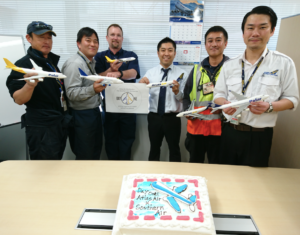
Pre COVID, Shige (center) with NGO team.
Atlas has been flying in NGO since 2010 and Polar since 2013
When I was younger and lived in Los Angeles, my father took me to airshows. While the airshows themselves did not motivate me at that particular time, the experience of seeing them remained with me. When I graduated from high school and was getting ready to decide on which direction to move towards in my life, working with airplanes felt natural to me. I enrolled in a technical college where I majored in airport business. I loved the movie Top Gun, which also inspired me to get into aviation!
At Atlas, there are opportunities to broaden horizons, expand skillsets, and learn new skills outside of your current job and responsibilities. Opening up new stations is always challenging and interesting. The most memorable time for me was when we opened up NGO. At the time, NGO was only a charter station. My first task was to open an office to handle the LCF flights. The office was small; it did not even have windows. It was a tough undertaking but it was an incredible experience. I learned so much! Today, NGO has grown to handle the LCF and Polar 767 and 747s and now our office has many large windows with plenty of sunshine.
My native language is Japanese and the word I would use to describe my experience at Atlas would be “挑戦” which roughly translates to “challenge” in English.

The Liberty City Optimist Club youth football team in pre-COVID days.
Giving back to the communities in which we live and work, as always been a huge source of pride, joy and purpose for our Company. This year, amidst the COVID-19 crisis, the need for assistance is particularly great.
The Liberty City Optimist Club, just five miles from our Miami Training Center is one such organization that relies on donations to help achieve its mission: to enhance the character and physical growth and development of at-risk children and youth in Miami Dade County.
This year, as a result of funds raised at the Atlas Air Worldwide Charity Golf Tournament, Atlas was able to make two significant donations to the Club.
“Here at Atlas, we believe every child deserves the opportunity to succeed and we appreciate opportunities in which we can play a role in developing tomorrow’s business and social leaders,” said Gary Wade, Vice President, Security.
Liberty City Optimist Club after-school participants listen to a presentation by Miami-Dade police officers.
The LCOC was co-founded by the late Coach Sam Johnson and Luther Campbell, an American rapper (former leader of the rap group 2 Live Crew), promoter, record executive, and actor. Luther has often shared that he and Coach Johnson were highly motivated to provide “a place where Liberty City kids could play baseball and football while learning they didn’t have to sling drugs on a street corner.”
Since its founding, the Club has become the largest in the Miami area, offering not only sports, but also providing academic and computer tutoring, supporting the development of generations of children, who are now hardworking adults in Miami-Dade.
“The LCOC is a very special place and is truly making a positive difference. In its 30 years of programming, it has significantly influenced the lives of thousands of children, young people and families through education and social development,” said Gary, who divides his time between our Miami and Purchase, New York offices and spent significant time in the Liberty City area when he was with the United States Drug Enforcement Administration (DEA).
“When John and I initially met with Luther and the Liberty City team, I almost didn’t recognize the neighborhood,” said Gary. “The emphasis the LCOC has put on education has made significant progress in creating a more engaged community.”
The Liberty City Optimist Club youth football team in pre-COVID days.
The Atlas donations will help further develop the LCOC after-school program, which provides children with a safe space outside of school to receive help with homework from tutors who are certified through the Florida Department of Education. The after-school program also offers college and job-readiness programs for high school-aged children and hosts workshops for parents who are seeking employment.
“We are so pleased to support the LCOC’s efforts to improve the lives of those less fortunate,” said Gary. “It is an honor and a privilege to be able to help in the education of future generations.
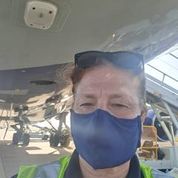
Regional Station Manager Kate Martinussen
I am based in Sydney Airport, which is an international airport in Sydney, New South Wales, Australia, just south of the center of the city in the suburb of Mascot. Our station is unique in that is required to manage the challenges that a city curfew brings. Sydney’s curfew begins at 2300 in the evening and is over at 0600 in the morning This can be very challenging as a lot of Polar flights are in and out very close to curfew.
Our “can do” attitude! No challenge is too big – we are committed to finding solutions. That is simply our mindset.
We have a wide range of cargo that comes in, which includes general cargo, such as aircraft engines, perishables such as fresh fruits and vegetables, and other cargo such as powdered milk and vitamins. We also take on many live animal charters to Asia and China.
The local holidays do not affect us that much because aviation never ever stops. We keep moving. In terms of planning, in the past Christmas period was a challenge as Australian industry traditionally closed a few days before Christmas until mid-January. I also need to be mindful of Australia Day and Anzac Day. Australia Day is the official national day of Australia and is celebrated every year on January 26
Anzac Day is a national day of remembrance (typically in April) in both Australia and New Zealand that celebrates all Australians and New Zealanders who served in the military. Some of my team have also served so I strive to ensure they have these days off so they can celebrate with their mates and participate in the parades.
Most of the stations that fall into my region receive support from local vendor companies. The Honolulu and Sydney stations are the only ones staffed by full-time Atlas employees. In Honolulu, our station manager, Obichang Ongklungel, is supported by four full-time staff. Here in Sydney, in addition to myself, there are two MX managers, Matt Cassidy and Keith St Aubyn in Ground Operations as well as two full time staff, Yanic LeGrand and Austin Wallace. There are also contractors that are utilized.
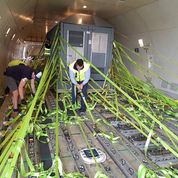
102 straps were used to tie Ongard’s crate down to the aircraft.
Polar started scheduled service into Australia in 1994. Atlas started regular service with the Qantas ACMI agreement in August 2004.
Most of my family are teachers and police officers – no one had worked in aviation, except me. But, when I was 11, my father took a job at Melbourne Airport as the airport chaplain. So, while he didn’t necessarily get me a job in aviation, I feel like this experience during my childhood pointed me in the direction of aviation. When I joined the industry at the age of 17, I initially thought I would do this, until I found something else. It’s now been 41 years and the job suits me perfectly. I like the logistics of this role and I especially enjoy the challenges that come with the job. Every day is different – tomorrow’s challenges will be different to today’s challenges.

Ongard hosed down at the Melbourne Zoo after a practice session of entering his travel crate.
We once moved an elephant named Ongard from the Melbourne Zoo (Australia) to Zoo
Miami (also known as The Miami-Dade Zoological Park and Gardens). The planning took well over 24 months and it was a Herculean effort for all who were involved. Another memorable moment was when we completed a park charter for a zoo that was closing in Cairns, Far North Queensland. Atlas was engaged to bring a variety of different animals – rhinos, hippos, monkeys, lions, tigers and bears – to a zoo in Jakarta, Indonesia. I love the animal charters because it gives me an opportunity to work to ensure they are all comfortable and prepared for a smooth trip.
PURCHASE, NEW YORK, November 5, 2020 – Atlas Air Worldwide Holdings, Inc. (Nasdaq: AAWW) today announced that Titan Aircraft Investments Ltd., a joint venture of its Titan Aviation Holdings, Inc. subsidiary and Bain Capital Credit, has entered into a US$300 million warehouse financing agreement with a subsidiary of Caisse de dépôt et placement du Québec (CDPQ), a global institutional investor, and BNP Paribas as joint lead arrangers and lenders. Titan Aircraft Investments has also separately entered into a US$200 million bridge financing agreement with volofin Capital Management being the sole lender and arranger.
The warehouse facility will provide debt capital to finance the acquisition of freighter aircraft leases by Titan Aircraft Investments and the bridge facility will provide debt capital to finance the conversion of passenger aircraft into freighter configuration.
“We are excited to partner with CDPQ, BNP Paribas, and volofin on these key financing facilities,” said Michael T. Steen, President and Chief Executive Officer of Titan Aviation Holdings and Executive Vice President and Chief Commercial Officer of Atlas Air Worldwide. “These facilities will enable Titan Aircraft Investments to serve the strong market demand for freighters and airfreight capacity, supported by the rapid expansion of express and e-commerce networks worldwide.”
“By partnering with best-in-class air cargo solutions provider, Titan Aviation, as well as leading aviation lender, BNP Paribas, and investor, Bain Capital Credit, we have the opportunity to leverage our deep knowledge of the evolving transportation and global e‑commerce sectors with our capacity to craft innovative financing structures,” said Martin Laguerre, Managing Director, Capital Solutions, CDPQ. “This investment is well aligned with our Capital Solutions strategy to create tailored solutions backed by high-quality assets in great demand by strong counterparties, such as global freight aircraft lessors, and to achieve attractive risk-adjusted returns.”
“It has been great to work with the Atlas and Titan teams on this project,” added Stewart Tanner, Senior Managing Director, volofin Capital Management. “volofin has used its extensive market knowledge and experience to create a bespoke and innovative structure to allow Titan the flexibility it needs within the bridge facility to both acquire and convert in-demand aircraft.”
Titan Aviation Holdings and Bain Capital Credit formed the joint venture in December 2019 to develop a diversified freighter aircraft leasing portfolio with an anticipated value of approximately US$1 billion. The long-term joint venture aims to capitalize on demand for cargo aircraft, underpinned by robust e-commerce and express market growth. Under the joint venture, Bain and Titan have committed to collectively provide US$400 million of equity capital to acquire aircraft over the next several years, which may be supplemented with additional commitments over time. Titan is also providing aircraft- and lease-management services to the venture.
The air cargo industry plays a very important role in the global economy, fueled by accelerated demand for e-commerce and express services. Titan Aircraft Investments is well-positioned to contribute to the growth of the global freighter fleet.
About Titan Aviation Holdings, Ltd. and Atlas Air Worldwide
Titan Aviation Holdings is a freighter-centric leasing company that provides dry leasing solutions to airlines worldwide. Titan’s fleet of cargo aircraft support customers including international flag carriers, express operators, e-commerce providers, and regional and domestic carriers. Titan’s deep airfreight domain expertise and innovative asset management solutions help customers quickly ramp up their aviation operations while minimizing capital investment. Since its inception in 2009, Titan has grown to become the third largest freighter lessor globally by fleet value with 30 aircraft and book value of over $1.4 billion.
Atlas Air Worldwide is a leading global provider of outsourced aircraft and aviation operating services. It is the parent company of Atlas Air, Inc., Southern Air Holdings, Inc. and Titan Aviation Holdings, Inc., and is the majority shareholder of Polar Air Cargo Worldwide, Inc. Our companies operate the world’s largest fleet of 747 freighter aircraft and provide customers the broadest array of Boeing 747, 777, 767 and 737 aircraft for domestic, regional and international cargo and passenger operations.
Atlas Air Worldwide’s press releases, SEC filings and other information may be accessed through the company’s home page, www.atlasairworldwide.com.
About Bain Capital Credit
Bain Capital Credit is a leading global credit specialist with approximately $41 billion in assets under management. Bain Capital Credit invests up and down the capital structure and across the spectrum of credit strategies, including leveraged loans, high-yield bonds, distressed debt, private lending, structured products, non-performing loans and equities.
About Caisse de dépôt et placement du Québec (CDPQ)
Caisse de dépôt et placement du Québec (CDPQ) is a long-term institutional investor that manages funds primarily for public and parapublic pension and insurance plans. As at June 30, 2020, it held CA$333.0 billion in net assets. As one of Canada’s leading institutional fund managers, CDPQ invests globally in major financial markets, private equity, infrastructure, real estate and private debt. For more information, visit cdpq.com, follow us on Twitter @LaCDPQ or consult our Facebook or LinkedIn pages.
About BNP Paribas
BNP Paribas is a leading bank in Europe with an international reach. It has a presence in 71 countries, with approximately 199,000 employees, of which more than 151,000 in Europe. The Group has key positions in its three main activities: Domestic Markets and International Financial Services (whose retail-banking networks and financial services are covered by Retail Banking & Services) and Corporate & Institutional Banking, which serves two client franchises: corporate clients and institutional investors. The Group helps all its clients (individuals, community associations, entrepreneurs, SMEs, corporates and institutional clients) to realise their projects through solutions spanning financing, investment, savings and protection insurance.
In Europe, the Group has four domestic markets (Belgium, France, Italy and Luxembourg) and BNP Paribas Personal Finance is the European leader in consumer lending.
BNP Paribas is rolling out its integrated retail-banking model in Mediterranean countries, in Turkey, in Eastern Europe and a large network in the western part of the United States. In its Corporate & Institutional Banking and International Financial Services activities, BNP Paribas also enjoys top positions in Europe, a strong presence in the Americas as well as a solid and fast-growing business in Asia-Pacific.
About volofin Capital Management
volofin Capital Management is a finance company focused on delivering reliable and innovative financing solutions for the commercial aviation market. Formed in January 2019, it has grown quickly to support the needs of both airlines and lessors throughout the industry, is headquartered in London and its 17 staff are split between offices in London and New York.
PURCHASE, NY, November 5, 2020 – Atlas Air Worldwide Holdings, Inc. (Nasdaq: AAWW) today announced third-quarter 2020 net income of $74.1 million, or $2.78 per diluted share, compared with net income of $60.0 million, or $2.32 per diluted share, in the third quarter of 2019.
On an adjusted basis, EBITDA totaled $196.3 million in the third quarter this year compared with $95.6 million in the third quarter of 2019. Adjusted net income in the third quarter of 2020 totaled $82.7 million, or $2.84 per diluted share, compared with $9.5 million, or $0.37 per diluted share, in the third quarter of 2019.
“The positive momentum of our business continued in the third quarter, despite a more complex, costly and challenging operating environment caused by the COVID-19 pandemic.” said Chief Executive Officer John W. Dietrich. “Our performance is the result of our entire team pulling together to increase utilization of our aircraft and execute on strong market demand and higher yields.
“We continue to broaden our customer base and grow with existing customers to maximize market opportunities. We further increased our roster of long-term charter customers, including the addition of Cainiao, the logistics arm of Alibaba, as well as expanding with HP Inc. and several large global freight forwarders.
“We also expanded operations for Amazon, where we began CMI flying three additional 737 freighters since September. We are now operating eight 737s for Amazon, complementing the large fleet of 767s that we have with them.
“Importantly, these long-term customer agreements provide secure and attractive earnings streams and deepen our strategic position in the fast-growing e-commerce sector, as well as in important global markets like China and South America.
“We are seeing substantial demand for our long-haul widebody services, both near- and long-term, at attractive yields. We are leveraging the agility of our business model and the scale of our fleet and global operations to serve this increased customer demand.
“We are also excited to announce that Titan Aircraft Investments, the joint venture between our Titan subsidiary and Bain Capital Credit, has arranged $500 million in financing facilities. The funds are available for the acquisition of freighter aircraft on lease and passenger aircraft for conversion to freighters. This important step will enable the joint venture to serve the strong market demand for leasing freighters.
“I am proud of the important role Atlas is playing in responding to this pandemic globally, and thank our crew and ground staff for their dedication in delivering safe and reliable service. We are taking wide-ranging precautions to safeguard our employees, while navigating through this complex operating backdrop.
“Air cargo has always been a vital component in the global supply chain as it provides speed, security and reliability that are unmatched by other modes of transportation. We remain committed to moving goods the world needs most, including medical equipment, pharmaceuticals, personal protective equipment, e-commerce, and other manufacturing and consumer products. We are also actively preparing for our expected role in the timely distribution of vaccines.”
Mr. Dietrich continued: “Looking to the fourth quarter, and subject to any material COVID-19 developments, we anticipate solid volumes and yields driven by continued e-commerce growth and end-of-the-year airfreight demand, coupled with the reduction of available cargo capacity in the market. To meet customer demand, we are reactivating our fourth 747 freighter that had been previously parked. This will add to the three 747 freighters and the 777 we placed back into service during the second quarter of 2020.
“As a result, we anticipate fourth-quarter revenue of about $850 million and adjusted EBITDA of approximately $215 million.*
“We also expect fourth-quarter 2020 adjusted net income to grow approximately 25% compared with adjusted net income of $82.7 million in the third quarter of this year.
“On a full-year basis, we now anticipate revenue of approximately $3.1 billion and adjusted EBITDA of about $780 million in 2020.”
He concluded: “Atlas is continuing to adapt and navigate through the challenges of 2020. With our talented team, world-class fleet, strong balance sheet and agile business model, we will continue to serve the demand for airfreight and deliver high-quality service for our customers – in these uncertain times and beyond.”
Third-Quarter Results
Volumes in the third quarter of 2020 increased to 90,528 block hours compared with 79,310 in the third quarter of 2019, with revenue rising to $809.9 million compared with $648.5 million in the prior-year quarter.
Higher ACMI segment revenue during the period primarily reflected an increase in the average revenue per block hour and increased flying, partially offset by the redeployment of 747-400 aircraft to the Charter segment. ACMI segment contribution during the quarter was primarily driven by increased aircraft utilization, reflecting strong demand from our customers, and a reduction in aircraft rent and depreciation. Partially offsetting these improvements were higher pilot costs related to premium pay for pilots operating in certain areas significantly impacted by COVID-19 and increased pay rates resulting from our recent interim agreement with our pilots. In addition, ACMI segment contribution reflected higher heavy maintenance, including additional engine overhauls to take advantage of slot availability and opportunities for vendor pricing discounts, and the redeployment of 747-400 aircraft to the Charter segment to support long-term charter programs.
Higher Charter segment revenue during the quarter was primarily due to an increase in flying, partially offset by a decrease in the average revenue per block hour due to lower fuel costs. Charter segment contribution was primarily driven by the increase in commercial cargo yields (excluding fuel) and demand for freighter aircraft, reflecting a reduction of available capacity in the market, the disruption of global supply chains due to the pandemic and our ability to increase utilization. In addition, segment contribution benefited from a reduction in aircraft rent and depreciation, and the redeployment of 747-400 aircraft from ACMI and the operation of a 777-200 freighter from Dry Leasing. These improvements were partially offset by: higher heavy maintenance expense, including additional engine overhauls to take advantage of slot availability and opportunities for vendor pricing discounts; higher pilot costs related to premium pay for pilots operating in certain areas significantly impacted by COVID-19; and increased pay rates resulting from our recent interim agreement with our pilots.
In Dry Leasing, lower segment revenue and contribution in the third quarter of 2020 primarily related to changes in leases and the disposition of certain nonessential Dry Leased aircraft during the first quarter of 2020.
Lower unallocated income and expenses, net, during the quarter primarily reflected CARES Act grant income of $64.2 million.
Reported earnings in the third quarter of 2020 included an unrealized loss on outstanding warrants of $43.6 million, compared with an unrealized gain on outstanding warrants of $83.2 million in the year-ago period.
Reported earnings in the third quarter of 2020 also included an effective income tax rate of 32.8%, due mainly to nondeductible changes in the value of outstanding warrants. On an adjusted basis, our results reflected an effective income tax rate of 22.8%.
Nine-Month Results
Reported results for the nine months ended September 30, 2020 reflected net income of $176.3 million, or $6.72 per diluted share, which included a $73.4 million unrealized loss on financial instruments. Results compared with net income of $117.1 million, or $1.34 per diluted share, which included an unrealized gain on financial instruments of $78.9 million, for the nine months ended September 30, 2019.
On an adjusted basis, EBITDA totaled $564.5 million in the first nine months of 2020 compared with $300.1 million in the first nine months of 2019. For the nine months ended September 30, 2020, adjusted net income totaled $235.8 million, or $8.71 per diluted share, compared with $41.4 million, or $1.54 per diluted share, in the first nine months of 2019.
Cash
At September 30, 2020, our cash and cash equivalents, restricted cash and short-term investments totaled $729.3 million, compared with $114.3 million at December 31, 2019.
Our improved cash balance primarily reflected cash provided by operating activities, and also included the funds we received through the Payroll Support Program available to air cargo carriers under the CARES Act, partially offset by cash used for investing and financing activities.
Net cash used for investing activities during the first nine months of 2020 primarily related to capital expenditures and payments for flight equipment and modifications, including spare engines and GEnx engine performance upgrade kits, partially offset by proceeds from the disposal of aircraft.
Net cash used for financing activities during the first nine months of 2020 primarily related to payments on debt obligations, including our revolving credit facility, partially offset by debt issuances.
To mitigate the impact of any continuation or worsening of the pandemic, we have implemented a number of cost-reduction initiatives, including a significant reduction in nonessential employee travel and the use of contractors. We have also taken actions to increase liquidity and strengthen our financial position, such as the sale of certain nonessential assets and our participation in the Payroll Support Program under the CARES Act.
Amazon Warrants
On October 9, 2020, Amazon elected a cashless exercise with respect to 3,607,477 shares vested under a Warrant issued in 2016. As a result, Amazon acquired 1,375,421 shares of AAWW common stock, representing approximately 4.99% (after the exercise) of our outstanding common shares.
2020 Outlook*
Looking to the fourth quarter, and subject to any material COVID-19 developments, we anticipate solid volumes and yields driven by continued e-commerce growth and end-of-the-year airfreight demand, coupled with the reduction of available cargo capacity in the market.
To meet customer demand, we are reactivating our fourth 747 freighter that had been previously parked. This will add to the three 747 freighters and the 777 we placed back into service during the second quarter of 2020.
As a result, we expect to fly approximately 95,000 block hours in the fourth quarter of 2020, with about 65% of the hours in ACMI and the remainder in Charter.
We also anticipate revenue of about $850 million and adjusted EBITDA of approximately $215 million. In addition, we expect fourth-quarter 2020 adjusted net income to grow approximately 25% compared with adjusted net income of $82.7 million in the third quarter of this year.*
Aircraft maintenance expense in the fourth quarter of 2020 is expected to total about $116 million, with depreciation and amortization totaling around $65 million. Core capital expenditures, which exclude aircraft and engine purchases, are projected to total approximately $25 to $35 million, mainly for parts and components for our fleet.
We also now anticipate full-year 2020 revenue of approximately $3.1 billion and adjusted EBITDA of about $780 million.
We estimate our full-year 2020 adjusted effective income tax rate will be approximately 23%.
We provide guidance on an adjusted basis because we are unable to predict, with reasonable certainty, the effects of outstanding warrants and other items that could be material to our reported results.*
Conference Call
Management will host a conference call to discuss Atlas Air Worldwide’s third-quarter 2020 financial and operating results at 11:00 a.m. Eastern Time on Thursday, November 5, 2020.
Interested parties may listen to the call live at Atlas Air Worldwide’s Investor site or at https://edge.media-server.com/mmc/p/ps7u7bvv.
For those unable to listen to the live call, a replay will be archived on the Investor site following the call. A replay will also be available through November 12 by dialing (855) 859-2056 (U.S. Toll Free) or (404) 537-3406 (from outside the U.S.) and using Access Code 1347526#.
To supplement our financial statements presented in accordance with U.S. GAAP, we present certain non-GAAP financial measures to assist in the evaluation of our business performance. These non-GAAP measures include Adjusted EBITDA; Adjusted net income; Adjusted Diluted EPS; Adjusted effective tax rate; and Free Cash Flow, which exclude certain noncash income and expenses, and items impacting year-over-year comparisons of our results. These non-GAAP measures may not be comparable to similarly titled measures used by other companies and should not be considered in isolation or as a substitute for Net income (loss); Diluted EPS; Effective tax rate; and Net Cash Provided by Operating Activities, which are the most directly comparable measures of performance prepared in accordance with U.S. GAAP.
Our management uses these non-GAAP financial measures in assessing the performance of the company’s ongoing operations and in planning and forecasting future periods. We believe that these adjusted measures, when considered together with the corresponding U.S. GAAP financial measures and the reconciliations to those measures, provide meaningful supplemental information to assist investors and analysts in understanding our financial results and assessing our prospects for future performance. For example:
*We provide guidance on an adjusted basis and are unable to provide forward-looking guidance on a U.S. GAAP basis or a reconciliation to the most directly comparable U.S. GAAP measures because we are unable to predict with reasonable certainty the ultimate outcome of certain significant items. The principal item is the impact on our results of our outstanding warrant liability, which is highly dependent on the change in our stock price during the period reported. These items are uncertain, depend on various factors, and could have a material impact on our U.S. GAAP results.
Atlas Air Worldwide is a leading global provider of outsourced aircraft and aviation operating services. It is the parent company of Atlas Air, Inc., Southern Air Holdings, Inc. and Titan Aviation Holdings, Inc., and is the majority shareholder of Polar Air Cargo Worldwide, Inc. Our companies operate the world’s largest fleet of 747 freighter aircraft and provide customers the broadest array of Boeing 747, 777, 767 and 737 aircraft for domestic, regional and international cargo and passenger operations.
Atlas Air Worldwide’s press releases, SEC filings and other information may be accessed through the company’s home page, www.atlasairworldwide.com.
This release contains “forward-looking statements” within the meaning of the Private Securities Litigation Reform Act of 1995 that reflect Atlas Air Worldwide’s current views with respect to certain current and future events and financial performance. Those statements are based on management’s beliefs, plans, expectations and assumptions, and on information currently available to management. Generally, the words “will,” “may,” “should,” “expect,” “anticipate,” “intend,” “plan,” “continue,” “believe,” “seek,” “project,” “estimate,” and similar expressions used in this release that do not relate to historical facts are intended to identify forward-looking statements.
Such forward-looking statements speak only as of the date of this release. They are and will be, as the case may be, subject to many risks, uncertainties and factors relating to the operations and business environments of Atlas Air Worldwide and its subsidiaries (collectively, the “companies”) that may cause the actual results of the companies to be materially different from any future results, express or implied, in such forward-looking statements.
Factors that could cause actual results to differ materially from these forward-looking statements include, but are not limited to, the following: our ability to effectively operate the network service contemplated by our agreements with Amazon; our ability to coordinate with Amazon to accept newly converted aircraft; the possibility that Amazon may terminate its agreements with the companies; the ability of the companies to operate pursuant to the terms of their financing facilities; the ability of the companies to obtain and maintain normal terms with vendors and service providers; the companies’ ability to maintain contracts that are critical to their operations; the ability of the companies to fund and execute their business plan; the ability of the companies to attract, motivate and/or retain key executives, pilots and associates; the ability of the companies to attract and retain customers; the continued availability of our wide-body aircraft; demand for cargo services in the markets in which the companies operate; changes in U.S. and foreign government trade policies; economic conditions; the impact of geographical events or health epidemics such as the COVID-19 pandemic; our compliance with the requirements and restrictions under the Payroll Support Program; the effects of any hostilities or act of war (in the Middle East or elsewhere) or any terrorist attack; significant data breach or disruption of our information technology systems; labor costs and relations, work stoppages and service slowdowns; the outcome of pending negotiations with our pilots’ union; financing costs; the cost and availability of war risk insurance; aviation fuel costs; security-related costs; competitive pressures on pricing (especially from lower-cost competitors); volatility in the international currency markets; weather conditions; government legislation and regulation; consumer perceptions of the companies’ products and services; anticipated and future litigation; and other risks and uncertainties set forth from time to time in Atlas Air Worldwide’s reports to the United States Securities and Exchange Commission.
For additional information, we refer you to the risk factors set forth under the heading “Risk Factors” in the most recent Annual Report on Form 10-K and subsequent reports on Form 10-Q filed by Atlas Air Worldwide with the Securities and Exchange Commission. Other factors and assumptions not identified above may also affect the forward-looking statements, and these other factors and assumptions may also cause actual results to differ materially from those discussed.
Except as stated in this release, Atlas Air Worldwide is not providing guidance or estimates regarding its anticipated business and financial performance for 2020 or thereafter.
Atlas Air Worldwide assumes no obligation to update such statements contained in this release to reflect actual results, changes in assumptions or changes in other factors affecting such estimates other than as required by law and expressly disclaims any obligation to revise or update publically any forward-looking statement to reflect future events or circumstances.
* * *

The Institute of Internal Auditors (IIA) recently recognized Shruthi Ramakrishnan as one of the profession’s 2020 Emerging Leaders in its October 2020 issue.
“This is a wonderful accomplishment and honor for Shruthi and the team,” said Charles (Chuck) Windeknecht, Vice President, Internal Audit Department.
“I was very excited when Chuck approached me about his plans to nominate me,” said Shruthi. “And then, of course, I was thrilled when the IIA confirmed I would be included in this year’s class of Emerging Leaders. This kind of recognition is the culmination of years of hard work. I am grateful to my mentors who have helped me evolve my thinking throughout my career. I am better today because of their support.”
Shruthi majored in financial accounting and auditing at Mumbai University and initially chose a career in external auditing. Her first job was with PwC, in Mumbai.
As Shruthi told IIA, “My first exposure to internal audit was at my client companies and networking events. I began to realize that internal auditors had a broad knowledge of the entity’s business and its operating environment.”
When Shruthi moved to the United States and began the process of obtaining her Certified Public Accountant (CPA) license, she felt even more strongly about pursuing internal audit as a career. In March 2018, she joined Atlas Air as an internal auditor.
“We [internal auditors] are treated as business partners,” she explained. “Our recommendations make a positive impact on the organization.” She also noted that internal auditors are constantly challenged to upgrade their technological skills to stay relevant — and to be of more value to the organization.
“Today’s dynamic and changing environment requires internal audit to pivot and adapt,” Shruthi said.
“Shruthi understands the relationship of key risks, systems, processes, and controls,” said Chuck.
She also emphasizes data analytics. In one particular project, she instituted tests on full populations that focus on high-risk areas rather than relying on sample-based testing.
Chuck added, “Her team provided management a level of fraud risk assurance that was not previously attainable through traditional testing approaches.”
Data, Shruthi believes, is “the new oil for businesses,” so internal audit functions must make the most of it. “I believe using it should be one of the priorities to build a next-gen internal audit function,” she said.
This forward-thinking approach is why Shruthi enjoys Atlas so much. “Every project in Internal Audit here at Atlas is unique and offers an opportunity to try to apply new tools. I am so lucky that my job applies to such a wide range of departments and enables me to speak to so many different colleagues throughout the Company. Every day I look forward to something new, challenging and different.”
Beyond her audit work, Shruthi supports Junior Achievement and mentors new team members. She’s also passionate about arts, particularly Bharatanatyam, a form of Indian classical dance and painting.
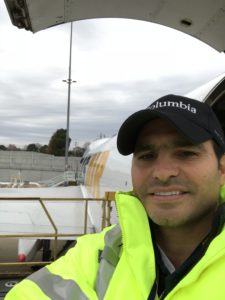 In celebration of Hispanic Heritage Month, we introduce you to Ground Operations Senior Director, Training & Compliance, Juan Rodriguez.
As Senior Director Ground Operations Standards, Training and Compliance, I oversee five operational support teams – Loadmasters, Special Loads, Standards & Procedures, Systems & Development and Training. Each teams plays a key role in ensuring the safety and efficiency of our operations.
In addition, I serve as a liaison to The Federal Aviation Administration (FAA).Ground Operations manages the regulatory policies, procedures and training for the Company’s FAA-approved Weight and Balance Control Program as well as its Dangerous Goods Program. I’m responsible for handling all interaction between the FAA and the Company related these programs. I also manage any policies or procedures, development and updates pertaining to these FAA-regulated programs.
My favorite part of working at Atlas is that there are so many different business segments, each with its own individual requirements, which makes every workday a different and exciting experience.
My dad was a Captain (he is now retired) for Panamanian carriers, including Air Panama and COPA Airlines. As a result, I was always around airplanes and joined him in the cockpit for a lot of trips. As a kid, I thought this was incredible and I thought I wanted to be a pilot, just like my dad.
My dad sat me down one day and explained that while he loved being a pilot, it was also a tough job for the family because he missed important milestones like birthdays and holidays. He unfortunately even missed the birth of one of my siblings (I have 3 brothers and 1 sister). I still loved aviation though and decided to pursue it as a career, just from a different angle.
My first job was as a flight attendant at COPA Airlines. I did this while attending Panama Canal College, where I graduated from a 2-year program with an Associate Degree.
After completing that program, it was recommended that students transfer to a college in the U.S. to finish their studies, which was what I really wanted to do. In 1989 however, the U.S. invaded Panama, which resulted in the removal of General Manuel Noriega from power. My family and I decided to apply for U.S. residence, since my grandparents were both U.S. citizens. One thing led to the next, and all of my family members obtained U.S. residency. One of my brothers and I moved to Miami, because we had some friends already living there.
Once I was settled, I attended Florida International University and Florida State University. From there, I obtained an FAA Dispatcher’s license from Aviation Technical Services (also in Miami) and then I received my MBA in Aviation from Embry-Riddle Aeronautical University.
In my opinion, Hispanics are responsible, respectful and very hard-working people by nature. Ultimately, my goal is to make the world a better place to live for everyone.
I was born and raised in Panama City, Panama in Central America. My country had a lot of U.S. influence due to the Panama Canal, which was built, operated and managed by the U.S. government for many years. Additionally, the U.S. Armed Forces Southern Command was based in Panama.
My grandfather was a U.S. veteran, so growing up I had the opportunity to see for myself the difference between the U.S. and the Panamanian living style. I attended a bilingual school with most classes taught in English, which was helpful for me. I was able to come to the U.S. with a student exchange program during the summer and I attended a high school in Utica, Michigan.
Once I had finished the exchange program, I knew that I wanted to eventually return to the U.S. to live and work full-time. From that moment on, I became very goal oriented. I learned that if you keep a positive attitude, prepare yourself well, maintain discipline, and work hard, it will result in opportunities in life. It inspired me to follow my goals and dreams while working in the industry that I love, which is aviation.
My family and I are very proud of our heritage every day. Before COVID-19, family gatherings took place on most weekends and sometimes even during a weekday. Since we celebrate our heritage all the time, we don’t typically plan for a special celebration during Hispanic Heritage Month.
Aviation is a challenging industry with many ups and downs, and you have to constantly adapt in an ever-changing environment. In pilot talk you have to “aviate, navigate and communicate,” to make it through. At the end of the day, it is a very satisfying and rewarding industry. Working with people with different backgrounds, education and experience for a common goal is simply wonderful!
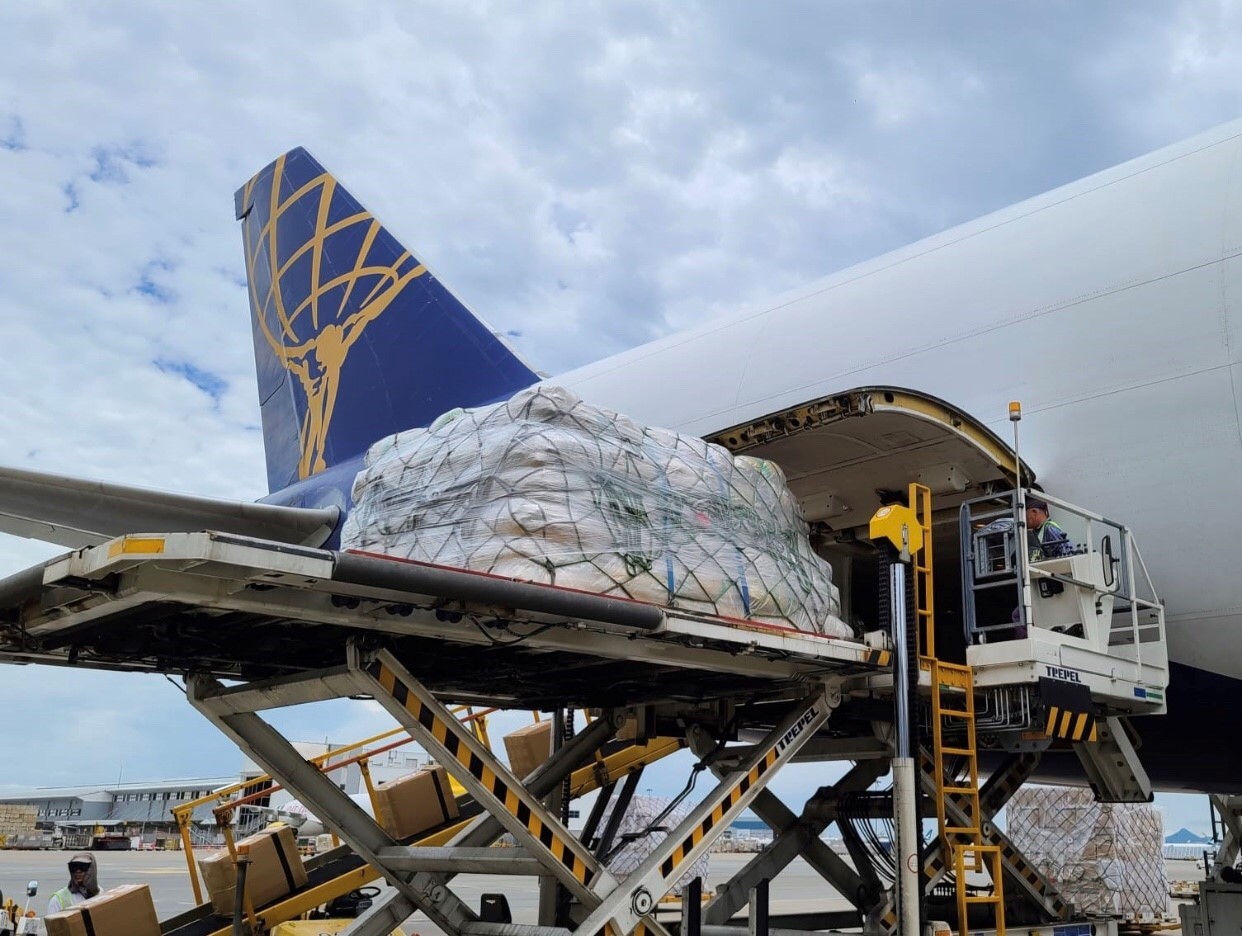
[PURCHASE, N.Y., October 12, 2020] Cainiao Smart Logistics Network, (“Cainiao”), the logistics arm of Alibaba Group Holding Limited, today announced a partnership to launch a charter program with Atlas Air Worldwide Holdings, Inc. (Nasdaq: AAWW) to enhance Alibaba’s extensive logistics network as cross-border trade between China and Latin America continues to expand.
Cainiao’s parcel volume to South America reached over eight million packages in the third quarter of 2020, double the number transported during the second quarter of this year. Beginning in November, Atlas Air will operate three weekly charter flights dedicated to Cainiao, linking China with Brazil and Chile, reducing the overall shipping time from a week to three days on average.
“At Cainiao, we continue to invest in our network to support Alibaba merchants operating over 100,000 online shops,” said William Xiong, Cainiao’s Chief Strategist and General Manager of Export Logistics. “Our partnership with Atlas Air will help us establish an efficient, reliable network to South America and other worldwide destinations by significantly reducing airfreight delivery time for the merchants we support.”
“We are excited to support Cainiao and Alibaba’s fast-growing e-commerce business and its global expansion in South America, and we look forward to developing our partnership further,” said President and Chief Executive Officer John Dietrich, Atlas Air Worldwide. “The global scale of our operating networks will enable Cainiao to continue to enhance its logistics capabilities and meet its objectives to offer customers faster deliveries globally.”
As previously announced by Cainiao, the company is committed to facilitating international trade by improving overall supply chain efficiency and launching direct routes to major regions across the globe. Cainiao is expected to operate about 1,300 chartered flights by the end of 2020.
-END-
Founded in 2013, Cainiao Smart Logistics Network (“Cainiao”) is a technology company and the logistics affiliate of Alibaba Group. It adopts a collaborative approach to logistics with an innovative and open data platform that improves efficiency and customer experience for all players along the supply chain. It carries forward Alibaba’s mission of making it easy to do business anywhere by aiming to deliver anywhere in China within 24 hours, and across the globe within 72 hours.
Media Contact
Jin WU
+86 150 1060 0187
Atlas Air Worldwide is a leading global provider of outsourced aircraft and aviation operating services. It is the parent company of Atlas Air, Inc., Southern Air Holdings, Inc. and Titan Aviation Holdings, Inc., and is the majority shareholder of Polar Air Cargo Worldwide, Inc. Our companies operate the world’s largest fleet of 747 freighter aircraft and provide customers the broadest array of Boeing 747, 777, 767 and 737 aircraft for domestic, regional and international cargo and passenger operations.
Atlas Air Worldwide’s press releases, SEC filings and other information may be accessed through the company’s home page, www.atlasairworldwide.com.
Contacts
Investors – Eric.Camadeco@atlasair.com
Media – Debbie.Coffey@atlasair.com
PURCHASE, N.Y., October 1, 2020 – Atlas Air Worldwide Holdings, Inc. (Nasdaq: AAWW), a leading global provider of outsourced aircraft and aviation operating services, today announced that the United States Air Force has exercised its option to continue its pilot and flight engineer training contract for Air Force One with Atlas Air, Inc. Atlas Air has held the contract since October 2007.
Under the extension, crews for the Air Force’s VC-25, a modified version of the Boeing 747-200, will receive ground and flight-simulator training at Atlas Air’s world-class training center in Miami, Florida. “Air Force One,” the designated call sign of the aircraft when the President is on board, consists of two specially configured Boeing 747-200B aircraft.
“We are honored to provide this vital training to the pilots and crews of Air Force One and the Presidential Airlift Group. Their exacting demands for safety, professionalism, efficiency and security make this contract extremely meaningful, and is a testament to the training provided by our highly experienced instructors,” said John Dietrich, President and Chief Executive Officer, Atlas Air Worldwide. “This contract extension is the result of our team’s unwavering commitment to safe and efficient operations.”
Atlas Air operates the world’s largest fleet of Boeing 747 Freighters to 90 countries, allowing the Company to provide up-to-date training for highly experienced crews. Atlas Air also supports the Department of Defense’s Civil Reserve Air Fleet (CRAF) cargo and passenger requirements.
About Atlas Air Worldwide:
Atlas Air Worldwide is a leading global provider of outsourced aircraft and aviation operating services. It is the parent company of Atlas Air, Inc., Southern Air Holdings, Inc. and Titan Aviation Holdings, Inc., and is the majority shareholder of Polar Air Cargo Worldwide, Inc. Our companies operate the world’s largest fleet of 747 freighter aircraft and provide customers the broadest array of Boeing 747, 777, 767 and 737 aircraft for domestic, regional and international cargo and passenger operations.
Atlas Air Worldwide’s press releases, SEC filings and other information may be accessed through the company’s home page, www.atlasairworldwide.com.
I remember my dad taking me to look at planes at the Lynden International Airport in Nassau, Bahamas (formerly known as Nassau International Airport) as far back as I can remember. I think I might have been three when we started doing that! I loved watching planes take off and land, and I knew even from that early age, that I needed to find a way to be around planes.
After high school, I got a job at the airport. I started as a baggage handler and then I started cleaning planes. After that, I became a ticketing agent, then a boarding agent and eventually, I became a pilot. Each job got me one step closer to my dream.

I don’t remember ever not wanting to be a pilot. Everyone I went to school with knew I wanted to be a pilot! So many airlines would fly into Nassau and I would always stare out the window in my classroom at the planes. A teacher once told me I would never make any money looking out a window. Years later, I was piloting a plane and that same teacher came on board. I reminded her that I was the student she said would never earn money looking at planes.
While I was working at the airport in various roles, I enrolled in flight school in Daytona Beach. I’d complete a training and then come back to the Bahamas to work at the airport and earn money for the next class. It took me longer than most pilots to complete flight school, since I was always back and forth between Daytona and Nassau.
I had two mentors who played a significant role in my becoming a pilot. Sharell McSweeney was a pilot at Lee Air Charter, while I was a baggage handler and she would fly me around and teach me what she was doing. My other mentor was Captain and Check Airman Buscheme Armbrister. He took me out flying and pushed me to be my best. He taught me to be patient, take my time and go research what I didn’t know and come back with the answer. He played a significant role in my becoming the pilot I am today.
When I was a kid, I knew I wanted to be a pilot, but I never saw any pilots that looked like me. Any time I put my pilot’s uniform on, it’s memorable to me. It shows the world that as a black man, I can do anything and overcome any challenge. I love walking through the airport in my uniform, holding my head high. It makes me proud when people come up to me with their kids and tell me I am a role model. I give out my number and tell people to call me if they want help becoming a pilot. I tell them how I came from a poor, very violent area in the Bahamas, but I persevered, and they can too.
Human cargo! At my last airline, I particularly liked flying children, as they like to see what’s going on. I enjoyed showing them around the cockpit and explaining how things work.
I used to love flying from LGA because it is challenging. There are lots of delays with weather and it was always a challenge, but I like a challenge! At Southern, I love flying from Rockford, Illinois. It’s easy in and easy out.
Of all the places I’ve landed, my favorite was Ontario, Canada. I flew there once, and it was so different than anything I had ever seen. I’m from the tropics and this was just so different. I was unable to go sightseeing then, but I’d love to go back and explore.
The best place to watch planes land is in Miami. There is a variety of planes coming into that airport, and there are many different places at the airport to watch them land and take off. It’s an awesome spot.
In the air! The views I get up there, watching the sun rise or set, there are no words to explain. A painter cannot paint a portrait of how beautiful it is. Sometimes it’s behind the clouds or on the ocean, but either way, it’s amazing.
The best part of being a pilot is actually being in control of a machine. It’s amazing to move a machine like that. You take the plane from point A to point B. Once the wheels leave the ground, it’s an amazing feeling.
PURCHASE, N.Y., August 6, 2020 – Atlas Air Worldwide Holdings, Inc. (Nasdaq: AAWW) today announced second-quarter 2020 net income of $78.9 million, or $3.01 per diluted share, compared with net income of $86.9 million, or $1.61 per diluted share, in the second quarter of 2019.
On an adjusted basis, EBITDA totaled $247.0 million in the second quarter this year compared with $84.1 million in the second quarter of 2019. Adjusted net income in the second quarter of 2020 totaled $123.2 million, or $4.71 per diluted share, compared with $4.5 million, or $0.17 per diluted share, in the second quarter of 2019.
“Revenue and earnings in the second quarter continued to exceed our expectations,” said Chief Executive Officer John W. Dietrich. “These positive results were primarily driven by the team capitalizing on strong demand and higher yields in our commercial charter and South America businesses. We also continued to provide the U.S. military with essential services and our ACMI customers flew well above their minimum guarantees.
“We continued to execute on very favorable business opportunities in a challenging operating environment, with the safety of our employees as our top priority. We leveraged the scale of our world-class fleet, the scope of our global operations and the flexibility of our business model to capitalize on market dynamics.
“To serve this increased demand, we reactivated three of our 747-400 converted freighters and operationalized a 777 freighter from our Dry Leasing business. This enabled us to serve the strong and profitable shorter-term demand, while also entering into numerous new long-term charter programs at attractive yields. We expanded our long-term charter business to include new agreements with manufacturers such as HP Inc., and large freight forwarders like DHL Global Forwarding, APEX Logistics, DB Schenker, Flexport and Geodis, all that wanted to secure committed capacity from us.”
Mr. Dietrich added: “We continued to deliver safe and high-quality service for our customers, despite the many challenges presented by this pandemic, including a variety of travel restrictions, testing protocols, quarantine mandates and other operational challenges. This is a true testament to the commitment and dedication of all our Atlas team members, particularly our crew and ground staff out in the field.
“We are taking every precaution to safeguard all our employees and ensure that we continue to transport the goods the world needs during these important times. We also appreciate our customers’ and vendors’ commitment to safety, and their partnership and unity as we protect our employees and our operations.”
He said: “Atlas is continuing to play an essential role in the global supply chain, and the goods we carry help save lives, fuel economic activity and support jobs. We are playing a key role in our customers’ operating networks, and are helping businesses and communities manage through COVID-19.
“With our broad portfolio of aircraft, including the world’s largest fleet of 747 freighters, along with large fleets of 777s, 767s and 737s, we provide our customers with fleet choices and operating capabilities that are unmatched in our industry.
“We have a talented team, a strong balance sheet, and we continue to demonstrate our ability to adjust to market conditions, capitalize on strategic growth opportunities, and navigate through these evolving and uncertain times.
“Reflecting our first-half results and our current market expectations, and subject to any material COVID-19 developments, we anticipate full-year 2020 revenue of just over $3 billion and adjusted EBITDA of approximately $750 million.*
“Our outlook also expects approximately 50% of our full-year 2020 adjusted net income to occur in the second half of the year. That would result in 2020 adjusted net income being more than double 2019.”
Second-Quarter Results
Volumes in the second quarter of 2020 increased to 84,966 block hours compared with 80,282 in the second quarter of 2019, with revenue rising to $825.3 million compared with $663.9 million in the prior-year quarter.
ACMI segment revenue during the period reflected lower block hours, primarily driven by the redeployment of 747-400 aircraft to the Charter segment to support new long-term charter programs with customers seeking to secure committed cargo capacity. This was partially offset by an increase in 777, 737 and 747-400 CMI flying.
ACMI segment contribution decreased during the quarter primarily due to higher heavy maintenance, including additional engine overhauls and other maintenance performed to take advantage of slot availability and opportunities for vendor pricing discounts. In addition, segment contribution reflected higher pilot costs related to a 10% increase in pay rates resulting from our recent interim agreement with our pilots and premium pay for pilots operating in certain areas outside of the U.S. significantly impacted by COVID-19; and the redeployment of 747-400 aircraft to the Charter segment to support new long-term charter programs with customers seeking to secure committed cargo capacity. Partially offsetting these items was an increase in 777, 737 and 747-400 CMI flying, and a reduction in aircraft rent and depreciation.
Charter segment revenue during the period primarily reflected increased levels of flying and an increase in the average rate per block hour. Block-hour volume growth was primarily driven by increased demand for freighter aircraft, reflecting a combination of increased demand for cargo, as well as the reduction of available cargo capacity in the market, the disruption of global supply chains due to the pandemic and our ability to increase utilization. As a result of this increase in demand and in support of new long-term charter programs with customers seeking to secure committed cargo capacity, we redeployed 747-400 aircraft from ACMI and began operating a 777 from our Dry Leasing business. The increase in the average rate per block hour primarily reflected higher commercial cargo yields (excluding fuel), partially offset by lower levels of 747 passenger flying for the U.S. military.
Charter segment contribution was driven by the increase in commercial cargo yields (excluding fuel), and demand for freighter aircraft, reflecting a combination of increased demand for cargo, as well as the reduction of available capacity in the market, the disruption of the global supply chain due to the pandemic and our ability to increase utilization. In addition, segment contribution benefited from a reduction in aircraft rent and depreciation, and the redeployment of 747-400 aircraft from ACMI and a 777 freighter from Dry Leasing. These improvements were partially offset by: higher heavy maintenance expense, including additional engine overhauls and other maintenance performed to take advantage of slot availability and opportunities for vendor pricing discounts; lower U.S. military passenger flying as the pandemic disrupted the movement of U.S. military personnel; and higher pilot costs related to a 10% increase in pay rates resulting from our recent interim agreement with our pilots and premium pay for pilots operating in certain areas outside of the U.S. significantly impacted by COVID-19.
In Dry Leasing, lower segment revenue and contribution in the second quarter of 2020 primarily related to changes in leases and the disposition of certain nonessential Dry Leased aircraft during the first quarter of 2020.
Lower unallocated income and expenses, net, during the quarter primarily reflected a $24.3 million (after tax) refund of aircraft rent paid in previous years.
Reported earnings in the second quarter of 2020 also included an effective income tax rate of 29.5%, due mainly to nondeductible changes in the value of outstanding warrants. On an adjusted basis, our results reflected an effective income tax rate of 21.6%.
Cash and Short-Term Investments
At June 30, 2020, our cash and cash equivalents, restricted cash and short-term investments totaled $739.2 million, compared with $114.3 million at December 31, 2019.
Our improved cash balance primarily reflected strong cash provided by operating activities, and also included the funds we received through the Payroll Support Program available to air cargo carriers under the CARES Act. Those funds will be utilized to pay the salaries, wages and benefits of employees, and helps us to protect the jobs of our highly-skilled team during this period of global uncertainty.
Net cash provided by financing activities during the first six months of 2020 primarily related to proceeds from debt issuance and from our revolving credit facility, partially offset by payments on debt obligations.
Net cash used for investing activities during the first six months of 2020 primarily related to capital expenditures and payments for flight equipment and modifications, including spare engines and GEnx engine performance upgrade kits, partially offset by proceeds from the disposal of aircraft.
To mitigate the impact of any continuation or worsening of the pandemic, we have implemented a number of cost-reduction initiatives, including a significant reduction in nonessential employee travel, the use of contractors and ground staff hiring. We have also taken actions to increase liquidity and strengthen our financial position, such as the sale of certain nonessential assets and our participation in the Payroll Support Program under the CARES Act.
Half-Year Results
Reported results for the six months ended June 30, 2020 reflected net income of $102.3 million, or $3.92 per diluted share, which included a $29.7 million unrealized loss on financial instruments. Results for the first half compared with net income of $57.2 million, or $2.21 per diluted share, which included an unrealized loss on financial instruments of $4.3 million, for the six months ended June 30, 2019.
On an adjusted basis, EBITDA totaled $368.2 million in the first half of 2020 compared with $204.5 million in the first half of 2019. First-half 2020 adjusted net income totaled $153.1 million, or $5.87 per diluted share, compared with $31.8 million, or $1.16 per diluted share, in the first half of 2019.
2020 Outlook*
Reflecting our first-half results and our current market expectations for the balance of the year, and subject to any material COVID-19 developments, we expect to fly more than 330,000 block hours in 2020, with about 70% of the hours in ACMI and the remainder in Charter.
We also anticipate revenue of just over $3 billion and adjusted EBITDA of approximately $750 million. Our outlook also expects approximately 50% of our full-year 2020 adjusted net income to occur in the second half of the year. That would result in 2020 adjusted net income being more than double 2019.
Historically, we have generated the vast majority of our earnings in the second half of the year. This year, however, due to the strength of the first half, we anticipate our full-year 2020 adjusted net income to be more evenly split between the first and second half. Our second-quarter results this year benefited from commercial charter yields that were significantly above typical levels and from a $24.3 million (after tax) refund of excess aircraft rent paid in previous years.
Aircraft maintenance expense in 2020 is expected to total about $480 million, with depreciation and amortization totaling around $255 million. Core capital expenditures, which exclude aircraft and engine purchases, are projected to total approximately $80 to $90 million, mainly for parts and components for our fleet.
We estimate our full-year 2020 adjusted effective income tax rate will be approximately 23%.
For the third quarter of 2020, we expect commercial charter yields to moderate from the second quarter, but still remain elevated compared with typical yields for this time of year. We anticipate flying more than 85,000 block hours (about 70% in ACMI), with revenue of nearly $800 million and adjusted EBITDA of about $170 million. We also expect that our third-quarter adjusted net income will represent approximately 20% of our full-year 2020 adjusted net income, or to be more than six times higher than third-quarter 2019 adjusted net income of $9.5 million.
We provide guidance on an adjusted basis because we are unable to predict, with reasonable certainty, the effects of outstanding warrants and other items that could be material to our reported results.*
Conference Call
Management will host a conference call to discuss Atlas Air Worldwide’s second-quarter 2020 financial and operating results at 11:00 a.m. Eastern Time on Thursday, August 6, 2020.
Interested parties may listen to the call live at Atlas Air Worldwide’s Investor site or at https://edge.media-server.com/mmc/p/9fgsqxqz.
For those unable to listen to the live call, a replay will be archived on the Investor site following the call. A replay will also be available through August 14 by dialing (855) 859-2056 (U.S. Toll Free) or (404) 537-3406 (from outside the U.S.) and using Access Code 1098299#.
About Non-GAAP Financial Measures
To supplement our financial statements presented in accordance with U.S. GAAP, we present certain non-GAAP financial measures to assist in the evaluation of our business performance. These non-GAAP measures include Adjusted EBITDA; Adjusted net income; Adjusted Diluted EPS; Adjusted effective tax rate; and Free Cash Flow, which exclude certain noncash income and expenses, and items impacting year-over-year comparisons of our results. These non-GAAP measures may not be comparable to similarly titled measures used by other companies and should not be considered in isolation or as a substitute for Net income (loss); Diluted EPS; Effective tax rate; and Net Cash Provided by Operating Activities, which are the most directly comparable measures of performance prepared in accordance with U.S. GAAP. Effective during the three months ended September 30, 2019, we changed our method of calculating Adjusted EBITDA to include Other Non-operating expenses (income) to enhance the usefulness for investors and analysts, and the comparability of the calculation to that of other companies. Prior period amounts have been adjusted for comparability.
Our management uses these non-GAAP financial measures in assessing the performance of the company’s ongoing operations and in planning and forecasting future periods. We believe that these adjusted measures, when considered together with the corresponding U.S. GAAP financial measures and the reconciliations to those measures, provide meaningful supplemental information to assist investors and analysts in understanding our financial results and assessing our prospects for future performance. For example:
*We provide guidance on an adjusted basis and are unable to provide forward-looking guidance on a U.S. GAAP basis or a reconciliation to the most directly comparable U.S. GAAP measures because we are unable to predict with reasonable certainty the ultimate outcome of certain significant items. The principal item is the impact on our results of our outstanding warrant liability, which are highly dependent on the change in our stock price during the period reported. These items are uncertain, depend on various factors, and could have a material impact on our U.S. GAAP results.
About Atlas Air Worldwide:
Atlas Air Worldwide is a leading global provider of outsourced aircraft and aviation operating services. It is the parent company of Atlas Air, Inc., Southern Air Holdings, Inc. and Titan Aviation Holdings, Inc., and is the majority shareholder of Polar Air Cargo Worldwide, Inc. Our companies operate the world’s largest fleet of 747 freighter aircraft and provide customers the broadest array of Boeing 747, 777, 767 and 737 aircraft for domestic, regional and international cargo and passenger operations.
Atlas Air Worldwide’s press releases, SEC filings and other information may be accessed through the company’s home page, www.atlasairworldwide.com.
This release contains “forward-looking statements” within the meaning of the Private Securities Litigation Reform Act of 1995 that reflect Atlas Air Worldwide’s current views with respect to certain current and future events and financial performance. Those statements are based on management’s beliefs, plans, expectations and assumptions, and on information currently available to management. Generally, the words “will,” “may,” “should,” “expect,” “anticipate,” “intend,” “plan,” “continue,” “believe,” “seek,” “project,” “estimate,” and similar expressions used in this release that do not relate to historical facts are intended to identify forward-looking statements.
Such forward-looking statements speak only as of the date of this release. They are and will be, as the case may be, subject to many risks, uncertainties and factors relating to the operations and business environments of Atlas Air Worldwide and its subsidiaries (collectively, the “companies”) that may cause the actual results of the companies to be materially different from any future results, express or implied, in such forward-looking statements.
Factors that could cause actual results to differ materially from these forward-looking statements include, but are not limited to, the following: our ability to effectively operate the network service contemplated by our agreements with Amazon; our ability to coordinate with Amazon to accept newly converted aircraft; the possibility that Amazon may terminate its agreements with the companies; the ability of the companies to operate pursuant to the terms of their financing facilities; the ability of the companies to obtain and maintain normal terms with vendors and service providers; the companies’ ability to maintain contracts that are critical to their operations; the ability of the companies to fund and execute their business plan; the ability of the companies to attract, motivate and/or retain key executives, pilots and associates; the ability of the companies to attract and retain customers; the continued availability of our
wide-body aircraft; demand for cargo services in the markets in which the companies operate; changes in U.S. and foreign government trade policies; economic conditions; the impact of geographical events or health epidemics such as the COVID-19 pandemic; our compliance with the requirements and restrictions under the Payroll Support Program; the effects of any hostilities or act of war (in the Middle East or elsewhere) or any terrorist attack; significant data breach or disruption of our information technology systems; labor costs and relations, work stoppages and service slowdowns; the outcome of pending negotiations with our pilots’ union; financing costs; the cost and availability of war risk insurance; aviation fuel costs; security-related costs; competitive pressures on pricing (especially from lower-cost competitors); volatility in the international currency markets; weather conditions; government legislation and regulation; consumer perceptions of the companies’ products and services; anticipated and future litigation; and other risks and uncertainties set forth from time to time in Atlas Air Worldwide’s reports to the United States Securities and Exchange Commission.
For additional information, we refer you to the risk factors set forth under the heading “Risk Factors” in the most recent Annual Report on Form 10-K and subsequent reports on Form 10-Q filed by Atlas Air Worldwide with the Securities and Exchange Commission. Other factors and assumptions not identified above may also affect the forward-looking statements, and these other factors and assumptions may also cause actual results to differ materially from those discussed.
Except as stated in this release, Atlas Air Worldwide is not providing guidance or estimates regarding its anticipated business and financial performance for 2020 or thereafter.
Atlas Air Worldwide assumes no obligation to update such statements contained in this release to reflect actual results, changes in assumptions or changes in other factors affecting such estimates other than as required by law and expressly disclaims any obligation to revise or update publically any forward-looking statement to reflect future events or circumstances.
* * *
The loss of Flight 3591 in February 2019 has had a profound impact on all of us at Atlas Air Worldwide. We remain heartbroken by the accident that claimed the lives of our three friends and colleagues and continue to provide their families with care and support.
We have been working closely with the National Transportation Safety Board (NTSB) to learn what took place and why it happened. The NTSB’s report provides valuable findings that will help our company and the aviation community as a whole as we continue to improve safety across our industry. Of critical importance is the need for an improved federal pilot records database to provide airlines with full visibility of pilot history in the hiring process.
Since our founding more than 25 years ago, safety has been a core value of our company, and continues to be our top priority. In partnership with our pilots and their union representation, we have built a culture of safety and remain committed to continuously improving our operations. We regularly evaluate our practices and protocols, and since the accident, have made several important enhancements to our own hiring, training, and pilot review procedures.
We thank the NTSB for its work, and for its conclusions and recommendations.
World Environment Day
World Environment Day (WED) is the most renowned day for environmental action. Since 1974, it has been celebrated every year on June 5, rallying governments, businesses, celebrities and citizens to focus their efforts on a pressing environmental issue.
This year’s theme was biodiversity, a concern the United Nations Environment Program (UNEP) calls both “urgent and existential.” Recent events such as bushfires in Brazil, Australia and the United States, locust infestations across East Africa, and now a global pandemic are highlighting the interdependence of humans and the “webs of life” in which they exist.
As a company that not only carries the world, but also cares for the world it carries, Atlas Air Worldwide is committed to being a responsible corporate citizen and protecting the natural environment through our programs and business processes. Our collective fforts to reduce our environmental footprint is outlined in our first environmental, social and governance (ESG) report, “Caring for the World We Carry.”
Atlas was a proud supporter of the global implementation of the Carbon Offsetting and Reduction Scheme for International Aviation (CORSIA) program established by the International Civil Aviation Organization (ICAO). ICAO’s aim for CORSIA, is to secure a broad-based international civil aviation commitment to zero net CO2 emissions growth starting in 2021.
“Implementation of CORSIA is important to the company because it demonstrates our commitment to global environmental objectives” says Russ Pommer, Atlas’ Associate General Counsel and Vice President Global Regulatory Affairs. “After the impact of COVID-19 has passed and economic growth resumes, it will be critical to have a uniformly applied international standard to control aviation carbon emissions. CORSIA provides the framework for that standard.”
Our commitment to the environment is shared throughout our family of companies. In celebration of WED, Polar Air Cargo held an education campaign to share information and resources about biodiversity with its employees. Emails from Poby, Polar’s mascot for environmental awareness, shared details about biodiversity and links to resources where employees could learn more.
In the week-long campaign leading up to WED, Polar held a Greening in Your World Photo Contest. Nearly 40 employees submitted photos, capturing how they were taking steps to improve the environment at home. Suki Cen, Manager Finance & Accounting, was chosen as the winner of a $50 gift card by raffle.
At Atlas Air Worldwide, we are committed to doing our part to safeguard the environment, not only on World Environment Day, but every day. Our ongoing technology investments allow us to fly farther, with cleaner, quieter engines and advanced airframes, for greater payload and fuel efficiency.
When the coronavirus pandemic forced the closure of schools throughout the nation, it meant many children who depend on school lunches for their primary source of nutrition would face hunger.
In response to that need, Atlas has donated $20,000 to organizations dedicated to ending childhood hunger in the communities surrounding its operations in South Florida (MIA) and Anchorage (ANC).
Atlas Air Worldwide Senior Vice President, Human Resources Patricia Goodwin-Peters said the donations are part of the company’s long-standing commitment to serve the communities in which it operates.
“These past few months have been tough on everyone,” Goodwin-Peters said. “Families who have never struggled before now depend on food pantries to help feed their children. In many ways, it’s easy to feel helpless during these times. But this is one area where we knew we could make a difference as a company.”

In South Florida, the organizations No Kid Hungry and Feeding South Florida each received gifts of $5,000 from Atlas.
In Anchorage, Atlas donated $10,000 to The Children’s Lunchbox, a program of Bean’s Café homeless shelter. The program provides food for children staying at the shelter and for food-insecure children during the summer months, when school lunches are not available. In South Florida, the organizations No Kid Hungry and Feeding South Florida each received gifts of $5,000.
“Feeding South Florida is grateful for the support of Atlas Air, without whom we could not serve the nearly 1.2 million people in need of assistance,” said Sari Vatske, executive director of Feeding South Florida.
Lisa Sauder, CEO of Bean’s Café in Anchorage, echoed that gratitude.
“Atlas’s donation has allowed hungry kids to eat during this COVID crisis,” Sauder said. “With the school’s food supply disrupted, you helped fill in the necessary gap, so that kids could eat. Thank you for your donation!”
Goodwin-Peters said Atlas’s employees are the driving force behind the company’s charitable giving.
“We are grateful to the employees in Atlas’s Miami and Anchorage stations, who inspired this outreach,” Goodwin-Peter’s said. “It is an honor to be able to help in this way.”
PURCHASE, N.Y., June 4, 2020 – Atlas Air Worldwide Holdings, Inc. (Nasdaq: AAWW) announced today that Lillian A. Dukes has been appointed Senior Vice President, Technical Operations.
Ms. Dukes will lead the company’s Technical Operations, overseeing all maintenance and engineering activities at the Company, and report to James A. Forbes, Executive Vice President and Chief Operating Officer. She will have responsibility for management of the total technical operations function, ensuring the establishment and control of safety, technical, and airworthiness standards for the aircraft fleet and the related maintenance of test equipment and facilities.
“Lillian is committed to Atlas Air Worldwide’s culture of safety, efficiency and reliability,” Mr. Forbes said. “As we continue to grow and expand our business globally with our exceptional team, we look forward to Lillian’s leadership in technical operations as we focus on delivering high-quality services for our customers.”
Ms. Dukes joins Atlas Air Worldwide with more than 25 years of technical operations and supply management experience in the aviation industry. Throughout her career, she has held a number of global operations leadership positions at a variety of companies, including American Airlines, American Eagle Airlines, Spirit AeroSystems, Beechcraft Corp., and General Electric. She has been recognized for improving start-up, turnaround, and mature manufacturing environments as well as implementing cost reduction and sustainable growth.
“I am excited to join Atlas Air Worldwide at this critical time and support the company’s dedication to safety, integrity, and excellence,” Ms. Dukes said. “As a leader in global airfreight, Atlas Air Worldwide’s outstanding team, efficient fleet, cost-saving operations, and superior customer service all contribute to a powerful foundation for continued growth and innovation.”
In addition to building an impressive career, Ms. Dukes has established herself as an international public speaker, a well-known mentor and community leader. She has been named to many prestigious lists including, The Exceptional People Magazine’s “Women of Excellence and Influence Exceeding Barriers,” The Network Journal’s “25 Influential Black Women,” and U.S. Black Engineer and IT’s “Centurions of Technical Excellence.” Ms. Dukes sits on several boards, including AWESOME (Achieving Women’s Excellence in Supply Chain Operations, Management & Education), the supply chain’s most active and prominent organization focused on advancing women’s supply chain leadership and also serves as Adjunct Lecturer in the Haslam College of Business within the Graduate & Executive Education Aerospace & Defense programs. Ms. Dukes holds a Bachelor of Science in Electrical Engineering and Mathematics from Carnegie Mellon University and a Master of Science in Electrical Engineering from Villanova University.
Ms. Dukes’ appointment follows the announcement that Larry Gibbons, Senior Vice President, Technical Operations and Chief Procurement Officer will be transitioning into an advisory role for the Company on July 1.
“Larry has guided the company’s fleet growth from eight aircraft to where we are today at 119, through highly strategic aircraft purchasing, maintenance and returns,” Mr. Forbes said. “We thank Larry for his tremendous leadership throughout his stellar 24-year career with Atlas Air Worldwide.”
About Atlas Air Worldwide:
Atlas Air Worldwide is a leading global provider of outsourced aircraft and aviation operating services. It is the parent company of Atlas Air, Inc., Southern Air Holdings, Inc. and Titan Aviation Holdings, Inc., and is the majority shareholder of Polar Air Cargo Worldwide, Inc. Our companies operate the world’s largest fleet of 747 freighter aircraft and provide customers the broadest array of Boeing 747, 777, 767 and 737 aircraft for domestic, regional and international cargo and passenger operations.
Atlas Air Worldwide’s press releases, SEC filings and other information may be accessed through the company’s home page, www.atlasairworldwide.com.
* * *
I feel great pride in working for Atlas, a company that not only carries the world, but also cares about the world we carry. Which is why it is important for me to share some thoughts during this very challenging time. Our world has been challenged by a global health crisis that we never thought was imaginable. And in the backdrop of this global pandemic, this week we were reminded of a very different challenge to our collective humanity that continues to exist in our society – the devastating impacts of racial injustice.
We are heartbroken by the senseless and horrific death of George Floyd, which comes on the heels of the tragic death of Ahmaud Arbery, and too many others. Since last week, we have seen peaceful protesters taking to the streets to express their right to organize and have their voice heard, and, unfortunately we have also witnessed the troubling and unnecessary violence that has broken out across our country. It is hard for me to find the right words, but I feel the need to say something.
Racial inequality is simply unacceptable. Period. I do not pretend to be able to put myself in the shoes of those who have experienced racism on a profoundly personal level, but I know that I can listen and learn, and that I can become an ally who provides support and comfort to our entire Atlas team. In this moment, there is a calling for all of us to be better – to listen, learn, and do better. It is a time of reflection. And during this time of reflection, I have thought a lot about the core values of our company. One of our values is “it takes a team” – and by team, I mean a united team, where our diversity makes us stronger.
We are committed to a culture of diversity and inclusion. In our workplace, we are focused on attracting and developing a workforce that reflects the composition of our communities and the world around us. This is reflected in the very diverse composition of our Board of Directors, and we continue to expand and focus on the diversity of our teams at all levels of the organization. We continue to pursue partnerships with local organizations who are focused on the education of our youth in underserved communities. And we continue to advocate in Washington D.C. for more programs that provide increased access and affordability to aviation educational programs.
Yes, this is progress. And yes, more needs to be done. We continue to make this a priority for our company each and every day, which in turn, helps our society at large move forward on the journey to racial equality. We all must do our part.
As always, we remain focused on the safety of our people. Amidst the protests and escalating violence taking place in many cities across the country, I want you all to know that we are working to keep all of our employees safe by taking appropriate steps, including relocating hotels where and when necessary for our crews, as well as monitoring curfews and vital transportation system shutdowns that impact our airport staff, as well as those working on the ramp and in the warehouses.
I do not have all the answers alone, but working together, we can be a powerful part of the solution. Your voices represent the world we live in – and we value and want to hear them. I invite you to share any of your views and experiences with me and your other leaders, and help us to do better for you as we provide a safe, inclusive workplace.

Atlas Air Worldwide is proud to play a critical role in serving the global supply chain at this time of significant need. Since this crisis began, our efforts have helped deliver life-saving medical equipment and supplies to those working on the front lines in our communities. We have contributed to public safety by facilitating the delivery of essential goods from all over the world. At the same time, we continue to serve as a critical provider of passenger and cargo airlift for the U.S. military.
Airfreight is a significant pillar in our nation’s supply chain. Its speed and flexibility fuels large industries and small businesses, and rapidly delivers high-value and time-critical cargo. Its importance is reflected in the growth of e-commerce and express delivery that has become such a big part of our daily lives.
Our country also depends on air cargo to overcome other disruptions in the supply chain. This is especially important during military contingencies and disaster relief operations, where speed is imperative. It has played a pivotal role in saving lives, as well as maintaining economic activity and jobs, during the current pandemic. Simply put, a strong air cargo system means a reliable, secure supply chain for the benefit of all U.S. citizens.
The services our company provides are essential, and they are even more critical now as our country looks to move forward from this pandemic and pursue economic recovery. Atlas operates around the world to connect producers to consumers, generating economic growth, jobs and market stability. Our services support the economy, providing the fastest, most reliable transportation and logistics to U.S. manufacturing, agriculture and other key sectors.
Recognizing the economic uncertainty ahead and the important role of air cargo in America’s critical infrastructure, the U.S. Congress and the Administration established a payroll support program in the Coronavirus Aid, Relief, and Economic Security (CARES) Act, including an allocation specifically for air cargo carriers. Today, we confirmed Atlas Air and Southern Air’s participation in the program. Our companies will receive a grant consisting of approximately $207.0 million in direct payroll support and $199.8 million in loans, which will be used to support the wages, salaries and benefits of our employees.
This program will help ensure that we are able to protect our workforce of highly skilled employees in the wake of this pandemic. This is particularly important given that the majority of our employees are pilots, who are required to maintain a continuous level of flying and training to adhere to Federal Aviation Administration safety regulations.
The CARES Act includes several provisions designed to ensure the continued employment of American workers, as well as safeguard the interests of American taxpayers.
In exchange for the financial support, the company will pay back, with interest, the loan portion of the proceeds, and also provide the U.S. Treasury Department with warrants to acquire our common stock as a condition of accepting the grant. Other conditions of the grant include a commitment to retain our employees and maintain their pay rates and benefits for a defined period of time. Additionally, there are limitations on share repurchases and dividends for approximately two years. The program also includes compensation limits for senior executives and other members of our leadership team.
We are grateful to the U.S. Congress and the Administration for recognizing the importance of air cargo and protecting the supply chain at this critical moment. It is a reflection of the value we provide as an industry and a company.
As we plan for the road ahead, we are confident in our ability to continue making a difference in the global recovery. We thank our employees for their ongoing dedication.